Introduction
Municipal kindergartens in Nizhny Novgorod follow the Federal State Educational Standard for Preschool Education (ФГОС ДО) and aim to support every child’s social, emotional, cognitive, and physical development. This guide offers practical advice for parents who want to strengthen their child’s preschool experience and build a smooth transition to school — adapted to life in Nizhny Novgorod.
What to expect from a municipal kindergarten
— Curriculum shaped by ФГОС ДО: play-based learning, socially oriented goals, early literacy and numeracy introduced through games.
— Qualified educators who plan daily activities to develop speech, fine and gross motor skills, creativity, and interpersonal skills.
— Daily routine with fixed times for arrival, activities, outdoor play (weather permitting), meals, nap, and parent handover.
— Cooperation with families through parent meetings, consultations, and occasional open days.
Key preschool development milestones (ages 3–6)
— 3–4 years: expanding vocabulary, short role-play, basic self-care (dressing, simple eating habits), running and climbing confidently.
— 4–5 years: longer conversations, more complex play themes, beginning of symbolic drawing, improved fine motor control (turning pages, simple puzzles).
— 5–6 years: clear speech, counting and basic concepts (big/small, more/less), drawing recognizable people, following multi-step instructions — skills that support school readiness.
Use these milestones as a guide, not a strict checklist. Every child grows at their own pace.
Daily routine: what helps children thrive
— Stable schedule: consistent wake-up, meals, sleep times — children feel secure with predictability.
— Morning routine checklist: breakfast, outdoor jacket appropriate for season, spare clothes, labelled items.
— Evening wind-down: quiet reading or calm play to prepare for sleep.
Local tip: Nizhny Novgorod winters are long and cold — keep a warm outdoor set, hat, mittens, and spare boot linings in the cloakroom (гардероб).
How parents can support learning at home
— Read daily: short stories, poems, and picture books in Russian. Ask questions about pictures and characters.
— Talk and listen: narrate daily routines, describe actions, encourage the child to retell simple events.
— Play together: role-play, building blocks, simple board games — games teach rules, turn-taking, and problem solving.
— Practice fine motor skills: drawing, cutting with safety scissors, stringing beads, and playing with clay.
— Limit screens: prefer interactive, shared activities over passive viewing. When screens are used, choose short, age-appropriate content and co-view.
— Encourage independence: let your child dress, feed, and tidy up with support and praise.
— Healthy nutrition and sleep: balanced meals, regular sleep schedule and active outdoor time support learning and mood.
Simple activities to reinforce skills (by age)
— 3–4 years:
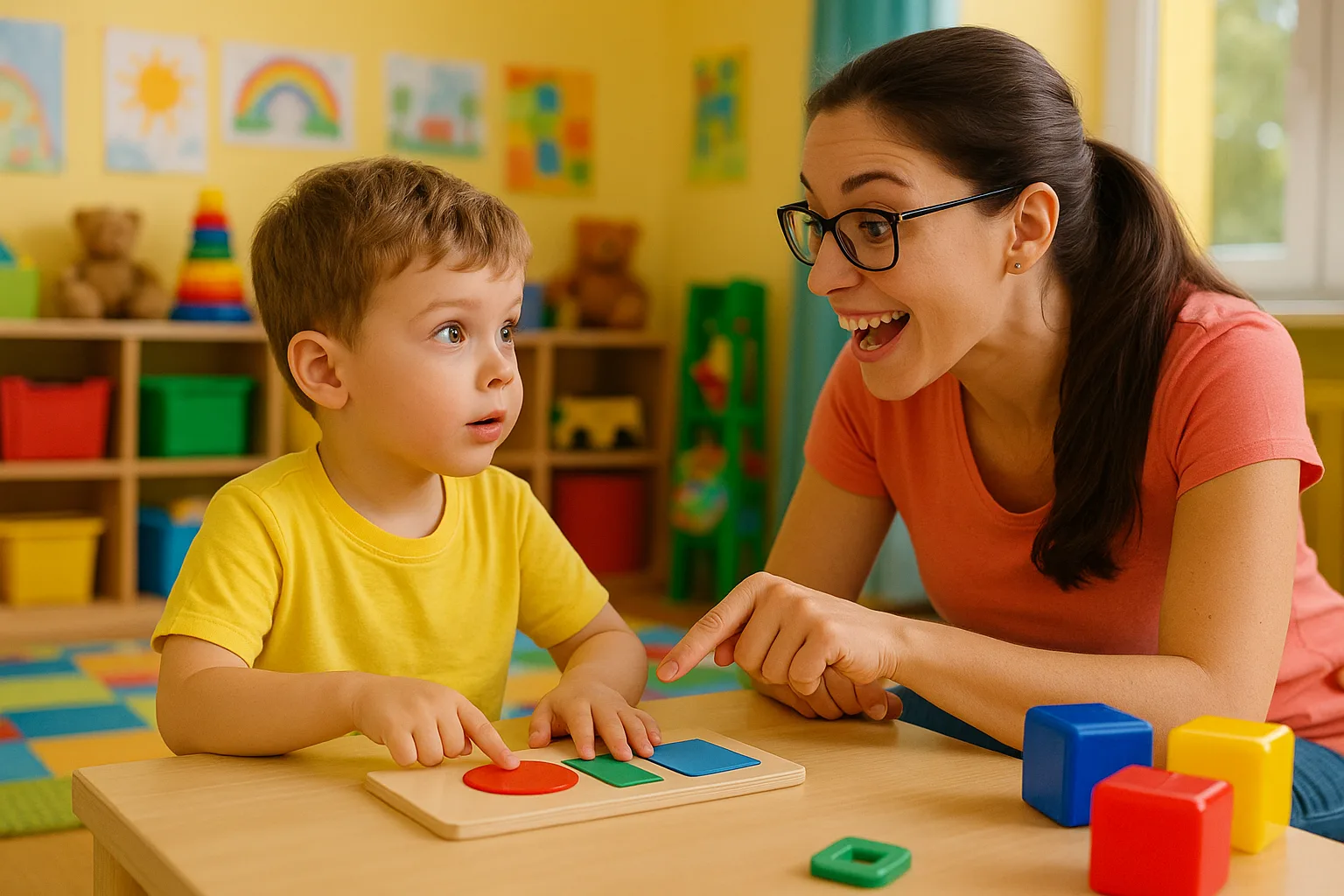
— Sorting games (by color, shape, size).
— Imitation play (kitchen, shop) to build language and social skills.
— 4–5 years:
— Simple matching and memory games.
— Drawing people and naming body parts; cutting straight lines.
— 5–6 years:
— Counting everyday items, simple pattern work.
— Story sequencing: ask the child to order three pictures to tell a story.
Social-emotional development and conflict
— Teach emotion words (“I’m angry/sad/happy”) and model calm responses.
— Coach conflict resolution: simple phrases (“I’m playing with this. Let’s take turns.”) and teacher-backed routines for sharing.
— Praise effort and specific behaviours (e.g., “I liked how you waited your turn”).
Parent–kindergarten partnership
— Regular communication: check the diary (жетон/дневник) or talk briefly with the educator at drop-off/pick-up.
— Attend parent meetings and open days — they help align home and kindergarten approaches.
— Share changes at home (sleep, diet, family events) so teachers can support transitions.
— Volunteer when possible: help with celebrations, reading sessions, or local excursions.
Safety and practicalities in Nizhny Novgorod
— Dress for seasons: layered clothing in autumn and spring; insulated outerwear and dry spare clothes in winter.
— Practice outdoor safety: visibility in low light (reflective elements), understanding traffic rules near kindergarten.
— Confirm vaccinations and medical forms required by the municipal kindergarten.
Local resources and next steps
— Municipal Department of Education in Nizhny Novgorod — for admissions, regulations, and official calendars.
— City libraries and cultural centres — regular baby- and toddler-friendly events, storytelling sessions, and exhibitions.
— Parks and playgrounds — use outdoor play spaces during milder months for gross-motor development and vitamin D.
Quick checklist for parents
— Prepare a labelled spare set of clothes and seasonal outerwear.
— Establish and maintain predictable daily routines.
— Read aloud daily and engage in play that encourages speech and thinking.
— Communicate regularly with educators and attend parent meetings.
— Encourage independence and social skills through guided practice at home.
Closing
A municipal kindergarten in Nizhny Novgorod can be a warm, structured space for your child’s early growth. By partnering closely with teachers, keeping consistent routines at home, and using simple, play-based activities, you’ll strengthen your child’s confidence and readiness for school. If you have specific concerns about development, ask the kindergarten teacher for a consultation or contact local child development specialists through the municipal education services.